
How to Get Glowing Skin Naturally: Simple Daily Tips
By Nisa Qamar | Founder, Lucency GlowUp . 3+ years in skincare & wellness
Do you ever catch your reflection and think, “Why does my skin look so dull and tired lately?” You’re not alone. Between work, family, and everything else on your plate, skincare is often the first thing to slip. The good news is that learning how to get glowing skin naturally doesn’t require a ten-step routine or a shelf full of expensive products.
At Lucency GlowUp, we believe glowing skin comes from simple, consistent habits — not perfection. In this guide, you’ll learn what actually causes dull skin, the daily habits that make the biggest difference, the best foods for your complexion, and a realistic 7-day plan you can start today, even with a packed schedule.
Let’s get your glow back, one small habit at a time.

What Does Naturally Glowing Skin Really Mean?
Before we jump into tips, let’s clear up a common misunderstanding. Naturally glowing skin isn’t about looking airbrushed or “flawless.” It’s about skin that looks healthy, hydrated, and alive.
Healthy Glow vs. Oily Skin
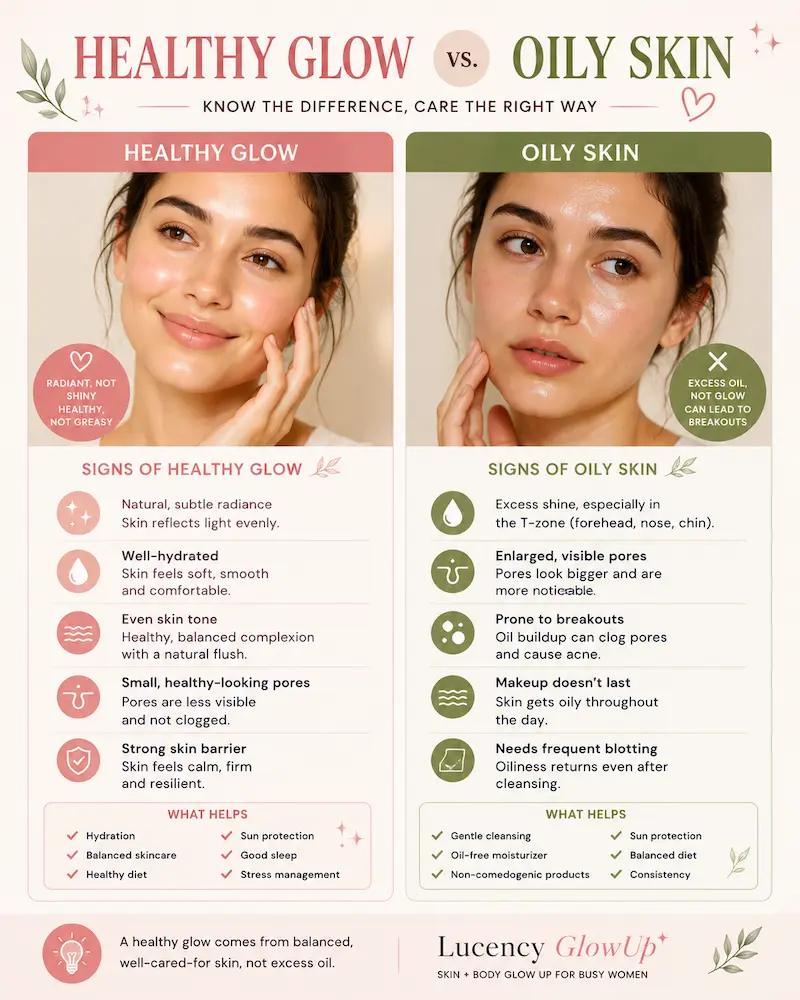
A lot of people confuse a natural glow with shiny, oily skin. They’re not the same thing.
- A healthy glow comes from well-hydrated skin cells that reflect light evenly.
- Oily skin often looks greasy, especially in the T-zone, and can come with clogged pores or breakouts.
You can have glowing skin without excess oil. The goal is balanced, well-cared-for skin — not a shiny finish.
Why Glowing Skin Reflects Overall Skin Health
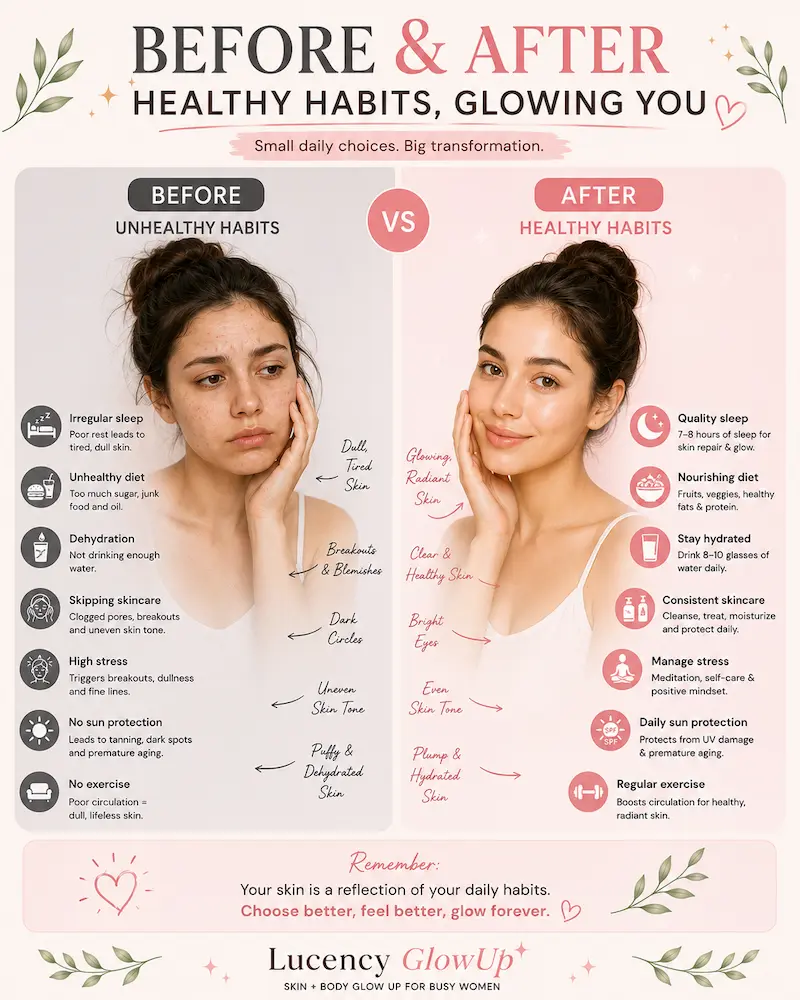
Your skin is your body’s largest organ, and it often shows signs of what’s happening inside you. Hydration, sleep, nutrition, and stress levels all show up on your face. That’s why naturally glowing skin is really a sign of consistent, healthy habits rather than a single product or treatment.
Common Myths About “Perfect Skin”
Let’s bust a few myths:
- Myth: Glowing skin means zero visible pores or lines. Reality: even healthy skin has texture.
- Myth: You need expensive products to glow. Reality: consistency matters more than price.
- Myth: Glowing skin happens overnight. Reality: it builds over weeks of good habits.
Everyone’s skin is different, and that’s completely normal.
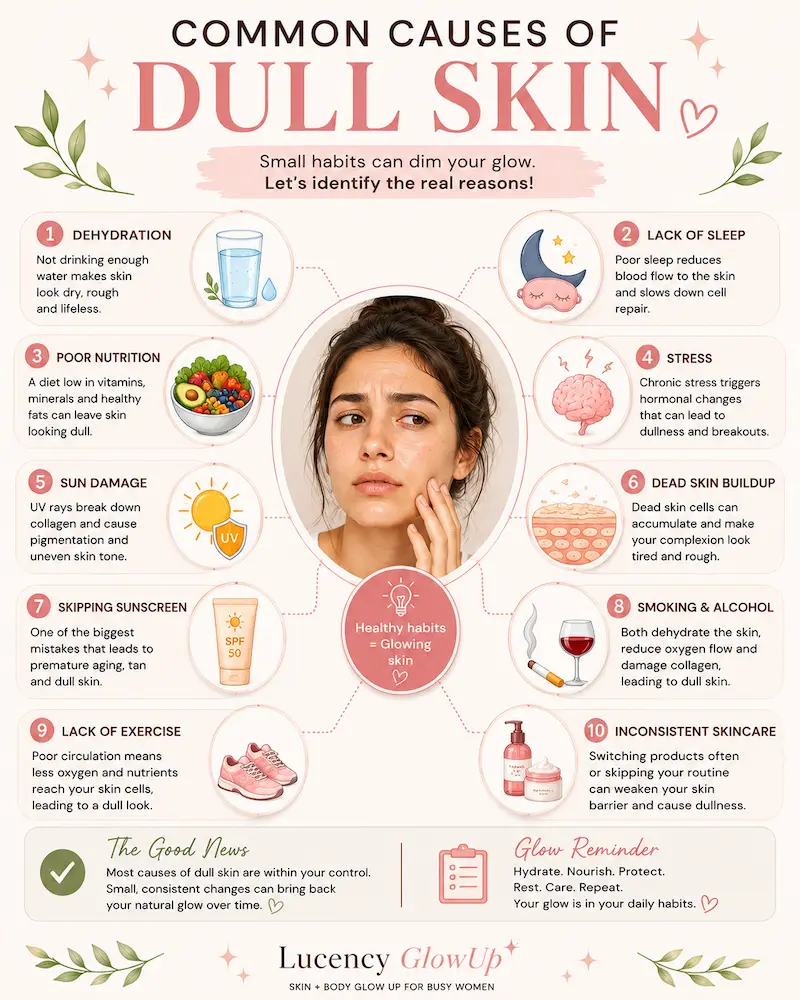
What Causes Dull and Tired-Looking Skin?
Understanding the causes of dullness helps you fix the real problem instead of guessing.
- Dehydration — When skin lacks water, it can look flat and rough instead of plump.
- Lack of sleep — Poor sleep reduces blood flow to the skin, leading to that tired, dull appearance.
- Poor nutrition — A diet low in vitamins and antioxidants can leave skin looking lackluster.
- Stress — Chronic stress can trigger hormonal changes that affect your complexion.
- Sun damage — Unprotected sun exposure breaks down collagen and creates uneven tone over time.
- Dead skin buildup — Without gentle exfoliation, dead cells accumulate and make skin look rough.
- Skipping sunscreen — This is one of the biggest skincare mistakes and a major cause of premature dullness and uneven tone.
- Smoking and alcohol — Both can dehydrate skin and affect circulation.
- Lack of exercise — Movement boosts circulation, which helps deliver oxygen and nutrients to skin cells.
- Inconsistent skincare — Switching products constantly or skipping routines confuses your skin barrier.
The good news? Most of these causes are within your control, and small changes can make a real difference over time.
Signs Your Skin Barrier May Be Damaged
Your skin barrier is the outermost layer of your skin. It helps keep moisture in while protecting your skin from irritants and environmental stressors. When this barrier becomes weakened or damaged, your skin may become more sensitive, dry, or irritated.
Here are some common signs that your skin barrier may need extra care:
- Dryness and flaking — Your skin may feel tight, rough, or noticeably flaky even after moisturizing.
- Redness or irritation — Skin may appear red or feel irritated more easily than usual.
- Stinging or burning — Products that normally feel comfortable may suddenly sting or burn when applied.
- Increased sensitivity — Your skin may react to products, weather changes, or other environmental factors more easily.
- Rough or uneven texture — Your complexion may feel rough instead of smooth and comfortable.
- Persistent tightness — Your skin may feel tight after cleansing, especially if you’re using a harsh cleanser.
- Breakouts or increased irritation — A weakened barrier can make it harder for your skin to tolerate products and environmental stressors.
How to Support Your Skin Barrier
If your skin is showing signs of irritation, focus on keeping your routine simple. Use a gentle cleanser, apply a fragrance-free moisturizer, and wear sunscreen during the day. Avoid introducing several new products at once, and reduce or pause exfoliation if your skin feels irritated.
Quick Tip: A healthy skin barrier doesn’t require a complicated routine. Sometimes, doing less and giving your skin time to recover is exactly what it needs.
If redness, burning, irritation, or other skin concerns persist, consider speaking with a dermatologist for personalized advice.
How to Get Glowing Skin Naturally: 10 Proven Tips
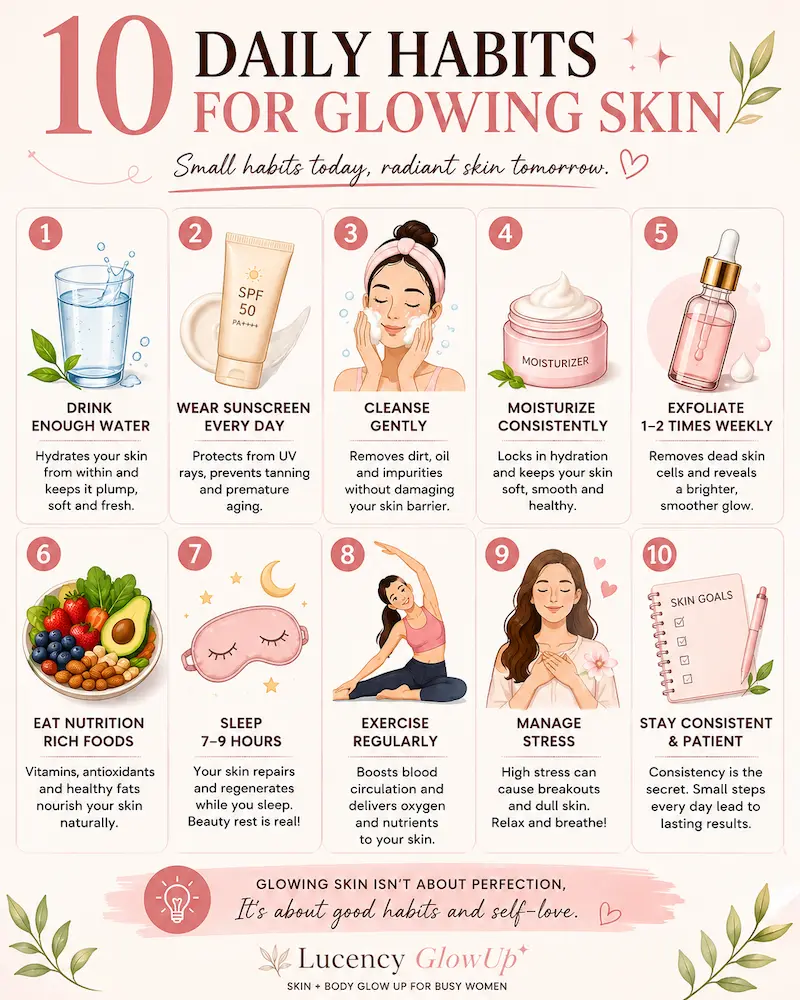
Here’s the heart of this guide — ten practical, beginner-friendly habits that support naturally glowing skin, without requiring hours of your day.
1. Drink Enough Water
Hydration for skin starts from the inside. Water helps maintain skin elasticity and can support a plumper, smoother appearance.
Practical tip: Keep a water bottle at your desk and aim to refill it 2–3 times a day. If plain water feels boring, add lemon or cucumber slices.
2. Wear Sunscreen Every Day
Sunscreen is arguably the single most important step in any skincare routine. Daily sun protection helps prevent premature aging and uneven tone.
Practical tip: Choose a broad-spectrum mineral sunscreen and apply it every morning, even on cloudy days or when you’re mostly indoors near windows.
3. Cleanse Gently
Harsh cleansers can strip your skin’s natural barrier, leading to irritation and dullness. A gentle cleanser removes dirt without over-drying.
Practical tip: Use lukewarm (not hot) water and a gentle cleanser twice a day — once in the morning, once at night.
4. Moisturize Consistently
Moisturizer helps lock in hydration and supports your skin barrier, regardless of your skin type — yes, even oily skin needs moisturizer.
Practical tip: Apply moisturizer while your skin is still slightly damp after cleansing to help seal in moisture.
5. Exfoliate 1–2 Times Weekly
Gentle exfoliation removes dead skin cells that can make your complexion look dull and rough.
Practical tip: Start with just once a week using a gentle exfoliant, and pay attention to how your skin responds before increasing frequency.
6. Eat Antioxidant-Rich Foods
Foods for glowing skin, like berries and leafy greens, help protect skin cells from everyday damage caused by environmental stress.
Practical tip: Add a handful of berries to your breakfast or a side of leafy greens to lunch — small swaps add up.
7. Sleep 7–9 Hours
Sleep is when your body repairs itself, including your skin. Consistently short sleep can contribute to a dull, tired appearance.
Practical tip: Set a consistent bedtime, even on weekends, and try dimming screens 30 minutes before bed.
8. Exercise Regularly
Movement increases blood flow, which helps deliver oxygen and nutrients to your skin.
Practical tip: Aim for at least 20–30 minutes of movement most days — a brisk walk counts.
9. Manage Stress
Chronic stress can affect your skin’s appearance and function. Managing stress is a key part of any healthy skin habits routine.
Practical tip: Try five minutes of deep breathing, journaling, or stretching during your busiest days.
10. Stay Consistent
This might be the most important tip of all. Skincare and healthy habits work through repetition, not perfection.
Practical tip: Pick two or three habits from this list and commit to them for 30 days before adding more.
Simple Glowing Skin Tips for Different Skin Types
Your skin type can affect which products and habits work best for you. While the basics—gentle cleansing, moisturizing, sun protection, and consistency—are important for everyone, you may need to adjust your routine based on how your skin behaves.
Dry Skin
Dry skin may feel tight, rough, flaky, or uncomfortable.
Try this:
- Choose a gentle, hydrating cleanser.
- Use a richer moisturizer to help prevent moisture loss.
- Apply moisturizer while your skin is slightly damp.
- Avoid very hot water and harsh exfoliation.
Oily Skin
Oily skin tends to produce more sebum and may look shiny, especially around the forehead, nose, and chin.
Try this:
- Use a gentle cleanser without over-washing.
- Choose a lightweight, non-comedogenic moisturizer.
- Don’t skip moisturizer just because your skin is oily.
- Use sunscreen with a lightweight or gel texture if you prefer it.
Combination Skin
Combination skin is typically oily in some areas and normal or dry in others.
Try this:
- Use a gentle cleanser that doesn’t leave your skin feeling tight.
- Choose a lightweight moisturizer and adjust the amount depending on the area.
- Avoid treating your entire face as if it has only one skin type.
- Keep exfoliation gentle and limited.
Sensitive Skin
Sensitive skin may become red, itchy, irritated, or uncomfortable when exposed to certain products or environmental factors.
Try this:
- Keep your routine simple.
- Choose gentle, fragrance-free products when possible.
- Patch test new products before applying them to your entire face.
- Introduce one new product at a time so you can identify potential irritants.
Normal Skin
Normal skin is generally well-balanced, with minimal dryness or excess oil.
Try this:
- Stick with a simple cleansing, moisturizing, and sunscreen routine.
- Avoid changing products unnecessarily.
- Continue focusing on healthy lifestyle habits such as sleep, nutrition, hydration, and stress management.
Quick Tip: Your skin type can change over time because of factors such as weather, age, hormones, and skincare products. Pay attention to how your skin feels and adjust your routine when necessary.
How Long Does It Take to See Glowing Skin?
Glowing skin doesn’t happen overnight. How quickly you notice changes depends on your skin type, current skin condition, lifestyle, and how consistently you follow your routine.
Instead of looking for an instant transformation, focus on small improvements that build over time.
| Habit or Change | What You May Notice |
|---|---|
| Staying consistently hydrated | Skin may feel less dry or tight within days |
| Getting better sleep | A more rested appearance may develop over 1–2 weeks |
| Following a simple skincare routine | Skin may feel smoother and more comfortable over several weeks |
| Wearing sunscreen consistently | Helps protect against future sun damage and uneven tone |
| Eating a balanced, nutrient-rich diet | Benefits develop gradually with consistent healthy eating |
| Regular exercise and stress management | Overall skin and wellness benefits may become noticeable over time |
| Consistent skincare habits | More noticeable improvements often take several weeks to months |
Think Progress, Not Perfection
Your skin naturally changes from day to day. One night of poor sleep or a stressful week doesn’t erase your progress. What matters most is what you do consistently over time.
Quick Tip: Take a photo of your skin today and another after 4–8 weeks under similar lighting. Comparing photos over time can help you notice gradual changes that may be difficult to see from day to day.
If you have persistent acne, unusual redness, irritation, or other ongoing skin concerns, consider consulting a dermatologist rather than relying solely on lifestyle or skincare changes.
Build a Simple Morning Skincare Routine
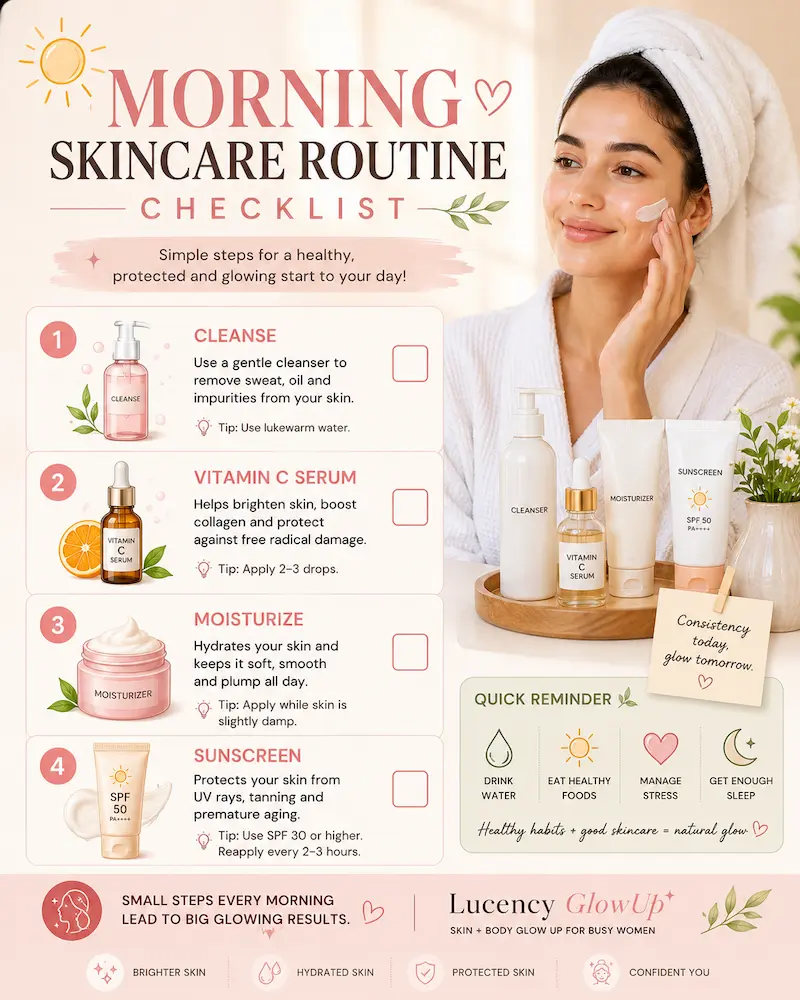
A morning skincare routine doesn’t need to be complicated. Here’s a simple, beginner-friendly structure:
- Cleanser — A gentle, hydrating cleanser to start fresh.
- Vitamin C serum (optional) — Known for supporting a brighter-looking complexion.
- Moisturizer — Lock in hydration for the day ahead.
- Sunscreen — Non-negotiable, rain or shine.
Quick Tip: Consistency with a simple routine will always outperform an expensive routine you don’t stick to.
Related Reading: For a more detailed guide, explore our Morning Glow Up Routine article for additional tips and product recommendations.
Don’t Skip Your Nighttime Skincare Routine
Your nighttime skincare routine matters just as much, since this is when your skin does much of its natural overnight repair.
- Makeup removal — Always remove makeup before bed to prevent clogged pores.
- Cleansing — Wash away the day’s dirt, oil, and sunscreen.
- Treatment products (optional) — Serums or targeted treatments, if part of your routine.
- Moisturizer — A slightly richer formula can support overnight hydration.
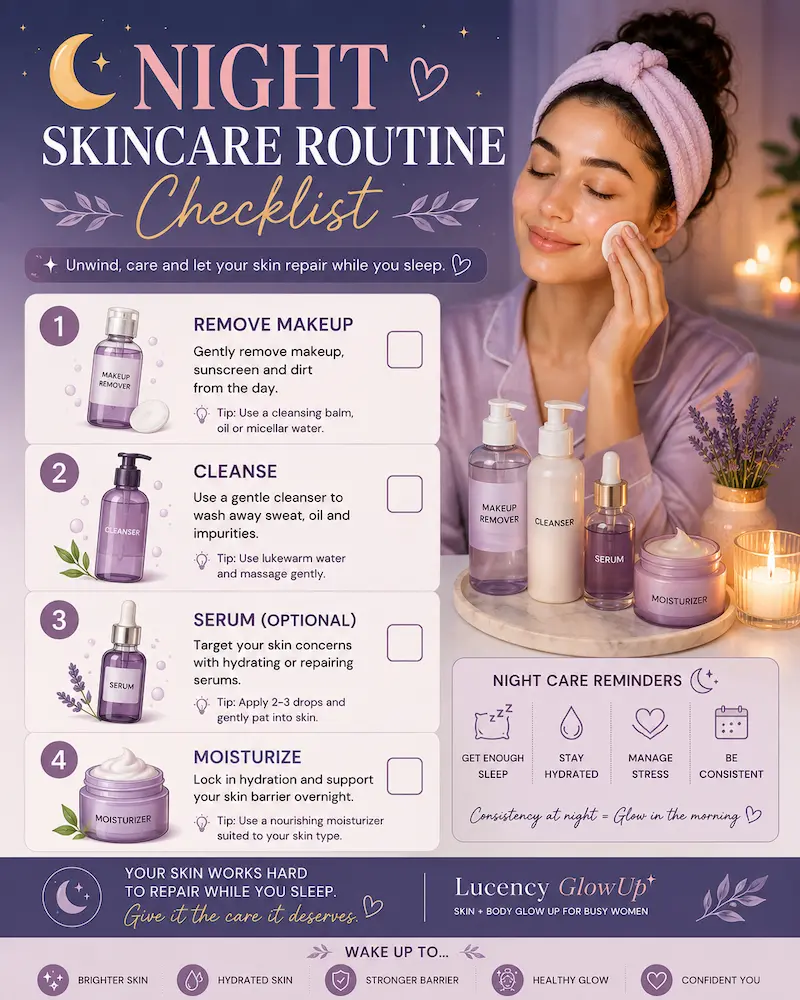
Skipping this step regularly is one of the most common skincare mistakes busy women make — it’s easy to fall into bed without cleansing, but your skin will thank you for the extra two minutes.
Related Reading: If you’d like a more detailed evening routine, check out our Nighttime Glow Up Routine guide, where we share additional skincare and relaxation tips for healthier skin and better sleep.
Best Foods for Naturally Glowing Skin
What you eat plays a real role in how your skin looks and feels. Here are nutrients to prioritize:
| Nutrient | Why It Matters | Food Sources |
|---|---|---|
| Vitamin C | Supports collagen production | Citrus fruits, bell peppers, strawberries |
| Vitamin E | Helps protect skin cells | Almonds, sunflower seeds, avocado |
| Omega-3 | Supports skin barrier function | Salmon, walnuts, flaxseed |
| Zinc | Involved in skin repair | Pumpkin seeds, chickpeas, lean meat |
| Protein | Building block for skin structure | Eggs, beans, chicken, tofu |
| Healthy fats | Support skin softness | Olive oil, avocado, nuts |
| Water-rich fruits | Add hydration | Watermelon, cucumber, oranges |
| Leafy greens | Rich in antioxidants | Spinach, kale, arugula |
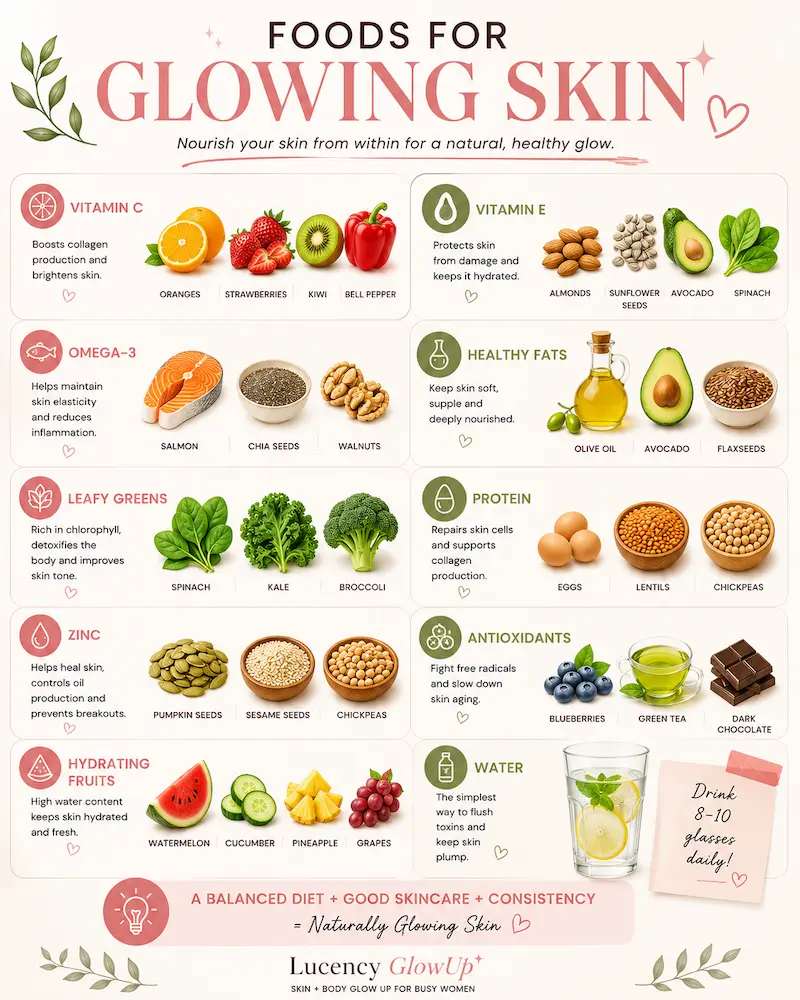
Quick Tip: You don’t need a perfect diet — just aim to add one skin-friendly food to each meal.
Healthy Lifestyle Habits That Improve Your Skin
Skincare products can only do so much. A healthy lifestyle for skin ties everything together:
- Sleep — Prioritize consistent, quality rest.
- Stress management — Build in small daily moments of calm.
- Exercise — Regular movement supports circulation.
- Hydration — Water intake throughout the day, not just when you remember.
- Limiting sugar — Excess sugar may contribute to inflammation.
- Avoiding smoking — Smoking is linked to premature skin aging.
- Moderating alcohol — Alcohol can dehydrate the skin.
- Consistency — The habit you repeat matters more than the one you do perfectly once.
Natural Ingredients That Can Support Healthy Skin
Many natural ingredients are popular in skincare for good reason, though results vary by skin type.
- Aloe vera — Known for its soothing, hydrating properties.
- Honey — Has natural humectant properties that help retain moisture.
- Oatmeal — Often used to calm sensitive or irritated skin.
- Green tea — Rich in antioxidants when used topically or consumed.
- Yogurt — Contains lactic acid, sometimes used for gentle exfoliation.
- Turmeric — Popular in DIY masks, but always patch test first since it can cause skin staining or irritation in some people.
Safety Note: Natural does not always mean suitable for everyone. Always patch test new ingredients on a small area of skin, and stop use if you notice irritation, redness, or discomfort.
Common Mistakes That Prevent Glowing Skin
Even well-intentioned routines can backfire. Watch out for these common skincare mistakes:
- Overwashing — Stripping your skin too often can damage your natural barrier.
- Over-exfoliating — More isn’t always better; over-exfoliation can cause redness and sensitivity.
- Skipping sunscreen — One of the biggest contributors to dull, uneven skin over time.
- Sleeping with makeup on — Can clog pores and contribute to breakouts.
- Picking at pimples — Can lead to irritation and prolonged healing.
- Not moisturizing oily skin — Skipping moisturizer can actually trigger more oil production.
- Trying too many products at once — Makes it hard to know what’s working — or what’s causing irritation.
7-Day Glowing Skin Routine for Busy Women
Here’s a realistic weekly plan focused on habits, not perfection.
| Day | Focus Habit |
|---|---|
| Day 1 | Set up your morning and nighttime routine basics |
| Day 2 | Prioritize 7–9 hours of sleep |
| Day 3 | Add one antioxidant-rich food to each meal |
| Day 4 | Gentle exfoliation session |
| Day 5 | 20-minute walk or workout |
| Day 6 | Stress-reset day (journaling, stretching, deep breathing) |
| Day 7 | Reflect and plan your next week |
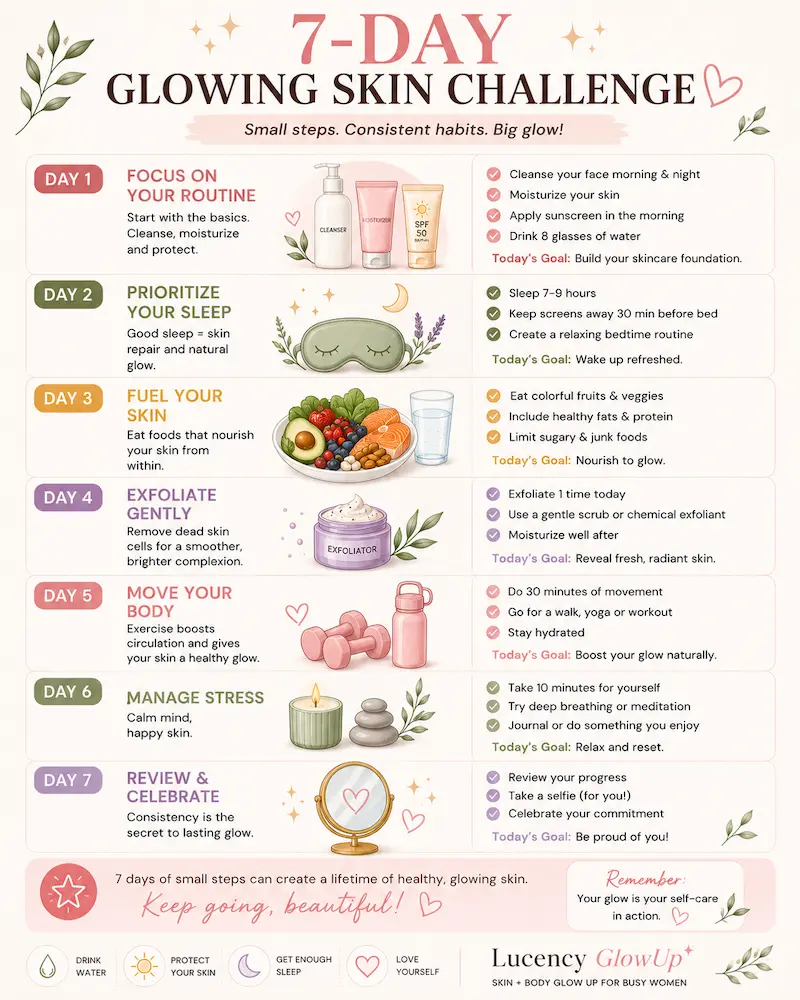
Quick Tip: Don’t try to do everything at once. Focus on one habit at a time and let it become second nature before adding the next.
Frequently Asked Questions
How can I get glowing skin naturally?
Focus on consistent basics: gentle cleansing, daily moisturizer and sunscreen, adequate hydration, sleep, and a balanced diet rich in antioxidants.
How long does it take to get glowing skin?
Everyone’s skin responds differently, but many people notice improvements within a few weeks of consistent habits. Long-term results typically build over months.
Which foods make skin glow?
Foods rich in vitamin C, vitamin E, omega-3s, zinc, and antioxidants — like berries, leafy greens, salmon, and nuts — can support healthy-looking skin.
Does drinking water improve skin?
Staying hydrated supports overall skin health and can help skin look more plump and less flat, though water alone isn’t a cure-all for all skin concerns.
Is sunscreen necessary indoors?
Yes — UV rays can pass through windows, so daily sunscreen is recommended even if you’re mostly indoors.
Can I get glowing skin without expensive products?
Absolutely. Simple, consistent basics — cleanser, moisturizer, sunscreen, hydration, sleep, and nutrition — matter far more than price.
Can stress make skin dull?
Yes, chronic stress can affect hormones and skin function, which may contribute to a duller appearance over time.
What is the best skincare routine for beginners?
A simple routine of gentle cleanser, moisturizer, and daily sunscreen in the morning, plus cleansing and moisturizing at night, is a great place to start.
Do I need a dermatologist for dull skin?
Occasional dullness often responds well to lifestyle changes, but persistent skin concerns, breakouts, or irritation should be evaluated by a dermatologist for personalized care.
Can natural remedies replace skincare products?
Natural ingredients can complement a routine, but they aren’t a replacement for basics like sunscreen and gentle cleansing.
Final Thoughts: Your Glow Starts With Small Habits
Learning how to get glowing skin naturally isn’t about chasing perfection or spending hours on your routine. It’s about small, consistent choices — drinking enough water, protecting your skin from the sun, eating nourishing foods, and getting enough rest.
Healthy skin depends on many factors, including genetics, hormones, sun exposure, sleep, nutrition, and consistent skincare habits.
Remember, healthy skin develops over time through consistent habits, not overnight fixes. If you’re dealing with persistent skin concerns, it’s always a good idea to check in with a dermatologist for guidance tailored to you.
Start small. Pick one or two habits from this guide today, and let your natural glow build from there — you’ve got this.
Ready to keep building your glow? Check out our related guides:
- Skin + Body Glow Up Routine for Busy Women
- Morning Glow Up Routine for Busy Women
- Nighttime Glow Up Routine
- Beginner Skincare Routine
- Beginner Body Glow Up Checklist
- 30-Day Glow Up Challenge
Save this guide on Pinterest so you can revisit these glowing skin tips whenever you need a quick reminder.
For more on sun protection and skin health, visit trusted resources like the American Academy of Dermatology or the NHS.
Note: This article is for educational purposes and does not replace professional medical advice. If you have persistent acne, eczema, rosacea, or other skin conditions, consult a dermatologist for personalized care.
About Author

NISA QAMAR
Nisa Qamar is the founder of Lucency GlowUp, where she shares practical skincare, wellness, and self-care tips for busy women. Her content focuses on building healthy habits that support confidence, balance, and long-term transformation. Nisa has spent 3+ years testing and refining these routines herself, and shares them as personal experience — always alongside, not in place of, advice from a dermatologist or doctor.
© Lucency GlowUp — All Rights Reserved