
Nighttime Glow Up Routine for Better Skin: 10 Simple Habits
By Lucency GlowUp | Skin + Body Glow Up for Busy Women
You crawl into bed exhausted, and the thought of a full skincare routine feels like climbing a mountain. Sound familiar? Most busy women know they should take better care of their skin before bed — but between work, family, and everything in between, nighttime self-care is usually the first thing to get skipped.
Here’s the thing: your nighttime glow up routine for better skin doesn’t have to be complicated or time-consuming. In fact, a few simple, consistent habits done every night can completely transform your complexion over time. In this post, you’ll learn exactly what to do before bed to wake up with healthier, softer, more radiant skin — without overhauling your entire life.
Lucency GlowUp Tip: Many women think glowing skin comes from expensive products. In reality, consistency with cleansing, hydration, and quality sleep often creates more noticeable improvements than constantly changing skincare products.
Let’s make your bedtime routine work for you.

What Is a Nighttime Glow Up Routine?
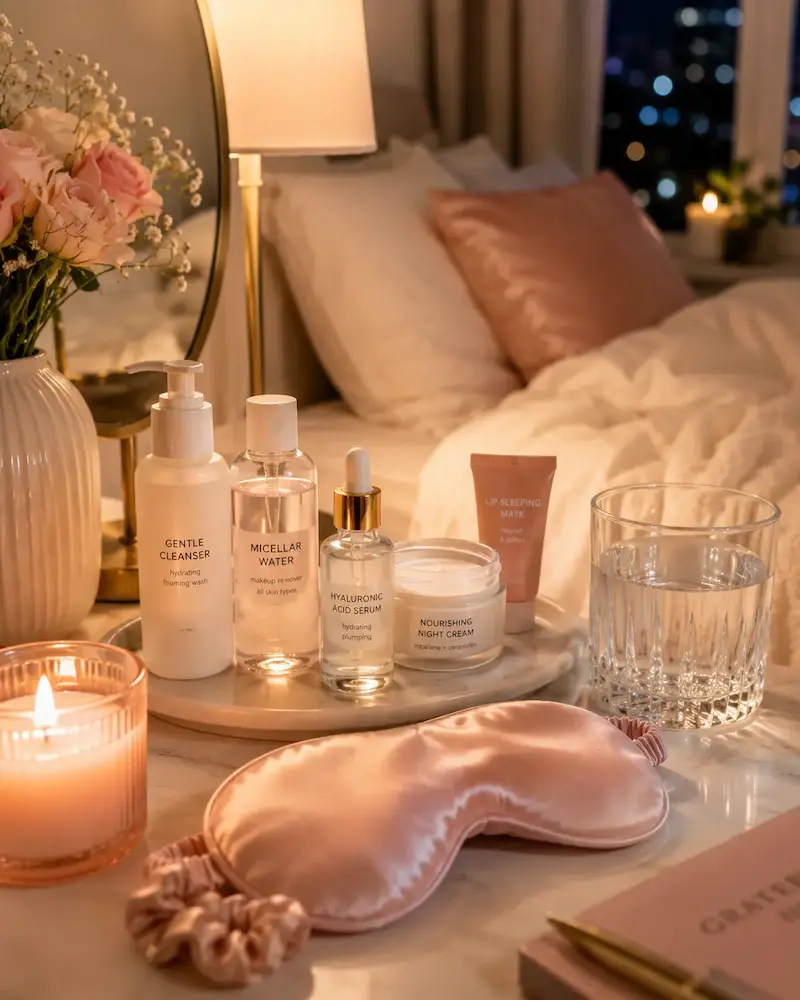
A nighttime glow up routine is a series of healthy evening habits that support skin repair while you sleep. It typically includes cleansing, hydration, moisturizing, stress management, and getting 7–9 hours of quality sleep.
Why a Nighttime Glow Up Routine Matters
While you sleep, your skin goes into active repair mode. According to the American Academy of Dermatology (AAD), the skin’s cell turnover rate significantly increases at night, which means your body is already doing the heavy lifting — your job is simply to support that process.
A consistent night glow up routine creates a reliable environment for your skin to recover from daily stressors like UV exposure, pollution, and blue light. Research-backed habits done consistently — not perfectly — are what lead to long-term glow. Think of your evening routine as the quiet investment that pays off every morning.
According to the American Academy of Dermatology, cleansing before bed helps remove dirt, oil, and environmental pollutants that accumulate throughout the day and may contribute to breakouts and irritation.
Remove Makeup and Cleanse Your Skin Properly
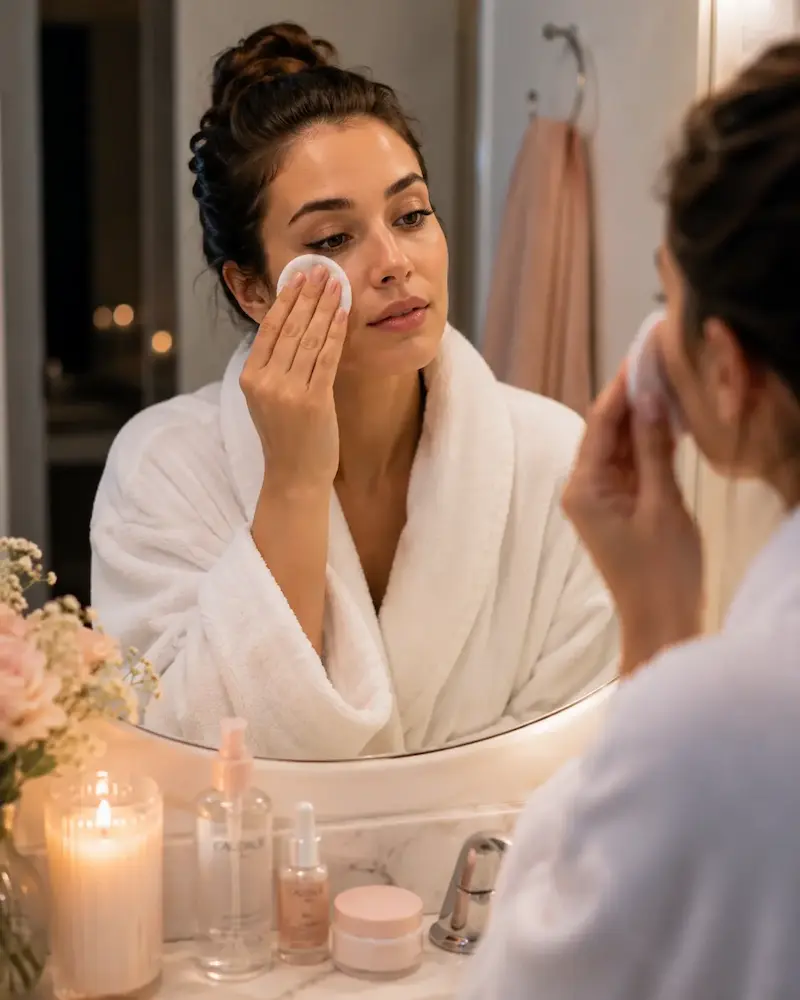
This is non-negotiable. Going to bed with makeup on is one of the fastest ways to clog pores, trigger breakouts, and accelerate skin aging. The Cleveland Clinic notes that leaving makeup on overnight can trap environmental pollutants against your skin, leading to oxidative stress and inflammation.
Tips for gentle, effective cleansing:
- Use a micellar water or cleansing balm first to dissolve makeup, then follow with a gentle foaming or gel cleanser.
- Avoid harsh scrubbing — let the cleanser do the work.
- Pat your face dry with a clean towel rather than rubbing.
- If you wear heavy SPF or long-wear makeup, a double cleanse is your best friend.
A clean base is the foundation of any effective evening skincare routine. Everything you apply afterward works better when it’s going onto truly clean skin.
Apply Hydrating and Nourishing Skincare Products
Once your skin is clean, it’s time to layer in the good stuff. Your beauty sleep routine should focus on ingredients that support repair, hydration, and renewal — not just surface-level glow.
Use a Hydrating Serum
Serums are lightweight and packed with active ingredients that penetrate deeper than moisturizers.
Look for:
- Hyaluronic acid to draw moisture into the skin
- Niacinamide to calm redness and reduce pore appearance
- Peptides to support collagen production overnight
Apply your serum while skin is still slightly damp from cleansing to lock in extra hydration.
Moisturize Before Bed
A good night cream or moisturizer seals everything in and prevents overnight water loss — called transepidermal water loss (TEWL). Thicker creams with ceramides, shea butter, or squalane are especially effective for a bedtime routine for glowing skin.
If you’re new to actives like retinol or AHAs, nighttime is the best time to introduce them since these ingredients can increase sun sensitivity. Start slow — once or twice a week — and always moisturize on top.
Don’t Forget Lip Care
Your lips have no oil glands, so they need nightly love too. Apply a thick lip balm or overnight lip mask before bed. Over time, this simple step makes a noticeable difference in texture and softness.
Avoid Nighttime Habits That Damage Your Skin
Your night routine for better skin isn’t just about what you add — it’s also about what you stop doing.
Sleeping with makeup on — even once — can cause breakouts and dullness. No matter how tired you are, a 60-second cleanse is always worth it.
Excessive screen time before bed doesn’t just disrupt your sleep. Blue light from phones and tablets can stimulate cortisol production, which breaks down collagen and can trigger inflammation in the skin. Try to power down screens at least 30–60 minutes before bed.
Picking or touching your face is another sneaky habit that transfers bacteria from your hands to your pores. Keep your hands away from your face as much as possible, especially in the evening when your skin barrier is in recovery mode.
Stay Hydrated and Support Skin from Within
No topical product can fully compensate for dehydration from the inside out. Drinking enough water throughout the day — and especially in the evening — is one of the most underrated nighttime skincare tips out there.
Evening hydration habits to try:
- Sip a calming herbal tea like chamomile or spearmint (both have mild anti-inflammatory properties)
- Avoid alcohol and excessive caffeine in the evenings, as both dehydrate the skin
- Try a small, skin-friendly nighttime snack if you’re hungry — think a handful of walnuts (rich in omega-3s), a few slices of cucumber, or a small bowl of plain Greek yogurt
These small nutritional habits support your skin’s overnight repair from the inside.
Create a Sleep Environment That Supports Better Skin
Your bedroom setup plays a bigger role in your skin health than most people realize. Building a sleep-supportive environment is a key part of any solid healthy nighttime habits for skin routine.

Keep Pillowcases Clean
Your pillowcase collects oil, bacteria, and product residue every single night. Swap it out at least once a week — or more often if you’re acne-prone. Silk or satin pillowcases are a great upgrade: they’re gentler on skin and cause less friction than cotton, which can contribute to sleep lines and hair breakage.
Sleep in a Cool, Dark Room
The National Sleep Foundation recommends keeping your bedroom between 60–67°F (15–19°C) for optimal sleep quality. Cooler temperatures support deeper sleep, which is when the most significant skin repair occurs. Blackout curtains can also make a big difference for light-sensitive sleepers.
Aim for 7–9 Hours of Sleep
This isn’t just wellness advice — it’s skin science. The National Sleep Foundation recommends 7–9 hours for adults. During deep sleep, your body releases human growth hormone, which plays a direct role in skin repair and cell regeneration. Consistent, quality sleep is genuinely one of the best anti-aging tools available.
Relax and Reduce Stress Before Bed
Chronic stress spikes cortisol, and high cortisol breaks down collagen, triggers oil production, and worsens conditions like acne and eczema. Winding down before bed isn’t just good for your mental health — it’s a legit skin strategy.
Try building one or two of these calming rituals into your evening:
- Light stretching or yoga — even 5 minutes helps release tension held in the body
- Journaling — offloading your thoughts before sleep reduces mental chatter and supports cortisol regulation
- Reading a physical book — screen-free and genuinely relaxing
- Deep breathing or box breathing — inhale for 4 counts, hold for 4, exhale for 4, hold for 4 — repeat 4 times
You don’t need to do all of these. Pick one that feels good and make it yours.
💡 Looking for a full daily approach? Check out our Skin and Body Glow Up Routine for a head-to-toe plan, and our Morning Glow Up Routine for Busy Women to set your skin up for success from sunrise.
Nighttime Glow Up Checklist
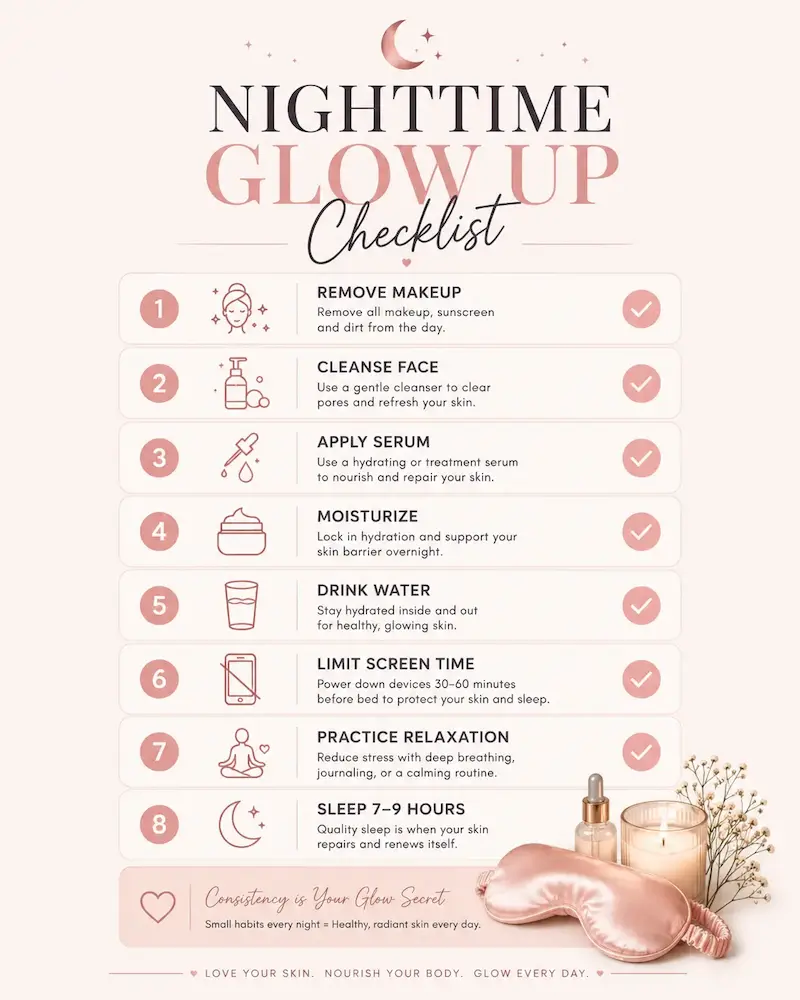
Here’s a quick reference you can screenshot and keep handy:
- Remove makeup with a cleansing balm or micellar water
- Follow with a gentle second cleanser
- Apply hydrating serum (hyaluronic acid, niacinamide, or peptides)
- Layer on night cream or moisturizer
- Apply lip balm or overnight lip mask
- Drink a glass of water or calming herbal tea
- Swap to a clean pillowcase (at least weekly)
- Dim lights and power down screens 30–60 minutes before bed
- Do one calming wind-down activity (breathwork, stretching, journaling)
- Aim for 7–9 hours of sleep
Common Nighttime Routine Mistakes
Even with the best intentions, a few common missteps can slow your progress:
Overusing products. More isn’t always better. Layering too many actives — retinol, AHAs, BHAs, and vitamin C all at once — can irritate and compromise your skin barrier. Keep it simple: cleanse, treat, moisturize.
Skipping moisturizer. Even oily skin needs moisture at night. Skipping this step leaves skin vulnerable to dehydration and can actually cause your oil glands to overcompensate. Use a lightweight moisturizer if you’re acne-prone.
Inconsistent sleep schedule. Going to bed at midnight one night and 9 p.m. the next disrupts your circadian rhythm, which directly affects skin cell repair cycles. Consistency — even imperfect consistency — is more powerful than perfection on your best days.
Conclusion
Healthy, glowing skin isn’t built in one night — it’s built night after night, through small, intentional habits that add up over time. Your nighttime glow up routine for better skin doesn’t need to be expensive, elaborate, or time-consuming. It just needs to be consistent.
Start with the basics: cleanse, moisturize, hydrate, and sleep. Then layer in the habits that feel sustainable for your life. Progress over perfection, always.
At Lucency GlowUp, we believe every busy woman deserves to wake up feeling radiant — and it starts with what you do tonight.
Sweet dreams. Your skin is already working on its glow. ✨
Ready for Your Full Glow Up?
If you’re building healthier beauty habits, start with our complete Skin and Body Glow Up Routine and Morning Glow Up Routine for Busy Women. Together, these routines create a simple day-to-night system for healthier skin and greater confidence.
Frequently Asked Questions
What is the best nighttime glow up routine for better skin?
The best routine is the one you’ll actually do consistently. A solid foundation includes: removing makeup, gentle cleansing, applying a hydrating serum, moisturizing, and sleeping on a clean pillowcase. Build from there as your habits solidify.
Does sleeping early improve skin health?
Yes — earlier sleep, especially before midnight, tends to align better with the body’s natural repair cycles. Quality sleep supports the body’s natural repair processes, including skin recovery and renewal. Consistent sleep schedules are associated with healthier skin appearance and overall well-being.
How many hours of sleep are best for glowing skin?
The National Sleep Foundation recommends 7–9 hours for adults. Consistently getting fewer than 6 hours is linked to increased cortisol, decreased collagen production, and a duller complexion. Sleep is truly one of the most powerful (and free) skincare ingredients available.
Should I moisturize every night?
Yes, for most skin types. Nighttime moisturizing helps repair the skin barrier, prevents moisture loss while you sleep, and supports the absorption of any serums or treatments applied underneath. If your skin is very oily, choose a gel-cream or lightweight formula.
What should I avoid before bed for healthier skin?
Avoid sleeping with makeup on, excessive screen time, touching or picking at your skin, alcohol, and heavily salted snacks (which can cause morning puffiness). Instead, prioritize hydration, a gentle skincare routine, and a relaxing wind-down habit.
Can a nighttime routine help with acne?
A consistent nighttime routine can support acne-prone skin by removing excess oil, makeup, and impurities while maintaining the skin barrier.
What skincare products should I use at night?
Most women benefit from a gentle cleanser, hydrating serum, moisturizer, and sunscreen during the day. Additional products like retinol can be added gradually.
Disclaimer: This article is for informational purposes only and does not constitute medical advice. Always consult a board-certified dermatologist for personalized skin concerns.
About Author

NISA QAMAR
Nisa Qamar is the founder of Lucency GlowUp, where she shares practical skincare, wellness, and self-care tips for busy women. Her content focuses on building healthy habits that support confidence, balance, and long-term transformation.
© Lucency GlowUp — All Rights Reserved